
© 2026 The Conscious Press, LLC
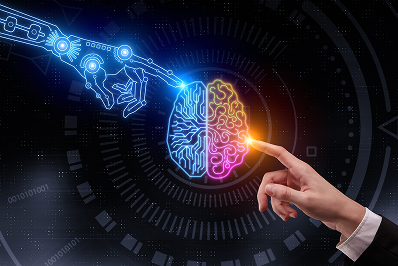
The rapid expansion of artificial intelligence has created a persistent confusion about what AI can do and what it cannot do. The distinction is not philosophical. It is practical. Human intelligence (HI) and artificial intelligence (AI) operate according to different principles. One conceives. The other executes. One generates meaning. The other generates patterns. Understanding this difference is essential for anyone who relies on writing to communicate ideas, shape decisions, or represent expertise.
HI is conceptual. It begins with intention. It identifies a purpose, evaluates context, and determines what must be said and why it matters. It draws on memory, experience, judgment, and the ability to interpret nuance. HI understands consequences. It recognizes the ethical, relational, and strategic dimensions of communication. It can distinguish between what is accurate and what is merely plausible. It can decide what is responsible to claim and what is necessary to omit. These capacities form the foundation of writing.
AI is mechanical. It does not conceive. It does not interpret. It does not understand. It identifies patterns in language and produces new patterns in response. It can generate text, but it cannot generate meaning. It can mimic tone, but it cannot grasp intention. It can produce sentences that appear coherent, but it cannot evaluate whether those sentences are true, appropriate, or aligned with the writer’s goals. AI operates through mechanics, not through insight.
This distinction becomes clear when we consider how writing actually works. Writing is not the arrangement of words. It is the articulation of thought. A document begins long before the first sentence appears. It begins with the writer’s understanding of the audience, the purpose, and the ideas that must be communicated. It requires the ability to form connections, identify priorities, and determine the structure that will guide the reader. These are conceptual tasks. They cannot be automated because they depend on human judgment.
AI can support these tasks, but it cannot perform them. It can help writers explore possibilities, test variations, or identify gaps in logic. It can offer provisional language that reduces the pressure of the blank page. It can help refine structure by proposing sequences or thematic groupings. It can serve as a diagnostic tool that highlights areas of confusion or inconsistency. These functions are valuable, but they are mechanical. They require a human mind to direct them.
The relationship between HI and AI is therefore not adversarial. It is complementary. HI provides conception. AI provides mechanics. When used thoughtfully, AI becomes an instrument that amplifies the writer’s capacity. It accelerates early stages of development. It supports clarity. It helps writers see their work from new angles. But it does not replace the thinking that gives writing its substance.
The danger arises when the mechanics are mistaken for the conception. AI can produce text that looks polished, but without human intention behind it, the text lacks coherence and authority. It may sound fluent, but it does not carry meaning. It may appear complete, but it does not reflect judgment. Readers sense this. They may not identify the source, but they recognize when a document lacks depth. Writing that is generated without conception is writing without purpose.
The most effective use of AI acknowledges this boundary. Writers who use AI well remain the authors of their ideas. They use AI to support their thinking, not to replace it. They rely on AI to help them refine structure, clarify language, or explore alternatives. They do not rely on AI to determine what the document should say. They understand that the responsibility for meaning remains with them.
This distinction is especially important in professional environments. Documents shape decisions. They communicate commitments. They represent expertise. They must be accurate, ethical, and aligned with organizational goals. AI cannot assume responsibility for these outcomes. It cannot understand the stakes. It cannot evaluate the implications of a claim. Only HI can do that.
HI versus AI is not a contest. It is a division of labor. Conception belongs to the human mind. Mechanics belong to the machine. When these roles are respected, writing becomes stronger. Ideas become clearer. The process becomes more efficient. The writer remains the source of meaning, and AI becomes a resource that supports the work.
The future of writing will not be defined by machines that replace writers. It will be defined by writers who understand how to use machines without surrendering the integrity of their thinking. HI will continue to provide the conception. AI will continue to provide the mechanics. Together, they create a partnership that expands what is possible while preserving what is essential.
Writing remains a human practice. AI simply helps us carry it forward with greater clarity, precision, and reach.